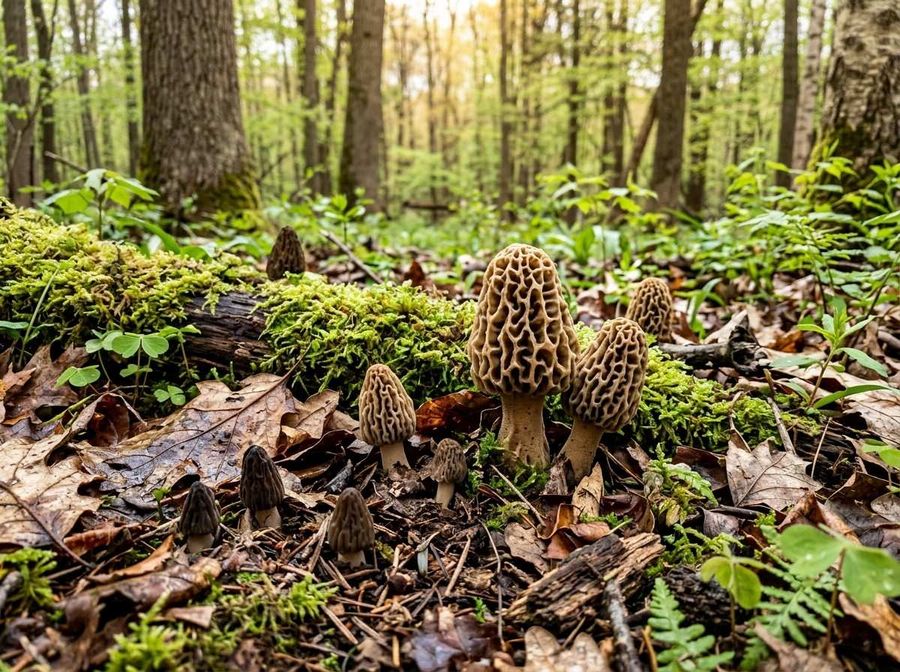
| False morels (Gyromitra, Verpa) | True morels | Cap is wrinkled or thimble-like, not neatly pitted; inside is chambered or stuffed, not fully hollow. Toxic — never eat. |
| Jack-o’-lantern (Omphalotus illudens) | Chanterelles | Grows in clusters on wood/buried roots, true thin blade-like gills, orange through and through. Causes severe GI poisoning. |
| Deadly Galerina (Galerina marginata) | Honey mushrooms, small brown mushrooms generally | Small brown mushroom on wood with a rusty-brown spore print and a ring. Contains the same toxins as the death cap. Deadly. |
| Destroying angels & death cap (Amanita spp.) | Puffballs, meadow mushrooms | White gills, ring on stem, cup (volva) at base. A puffball must be cut open: if you see the outline of a mushroom inside, it’s an Amanita “egg” — discard it. |
| Poison hemlock (Conium maculatum) | Wild carrot, parsley family plants | Purple-blotched smooth stems, musty smell, no hairs. All parts deadly. Never eat any white-flowered carrot-family wild plant without expert certainty. |
| Water hemlock (Cicuta maculata) | Elderberry (habitat), wild parsnip | Wet ground, purple-streaked stem, chambered root. Among the most toxic plants in North America. |
| Pokeweed (Phytolacca americana) | Spring greens (“poke sallet” tradition) | Roots, mature stems, leaves, and berries are toxic. The traditional dish requires very young shoots and repeated boiling with water changes — treat as high-risk and skip it as a beginner. |
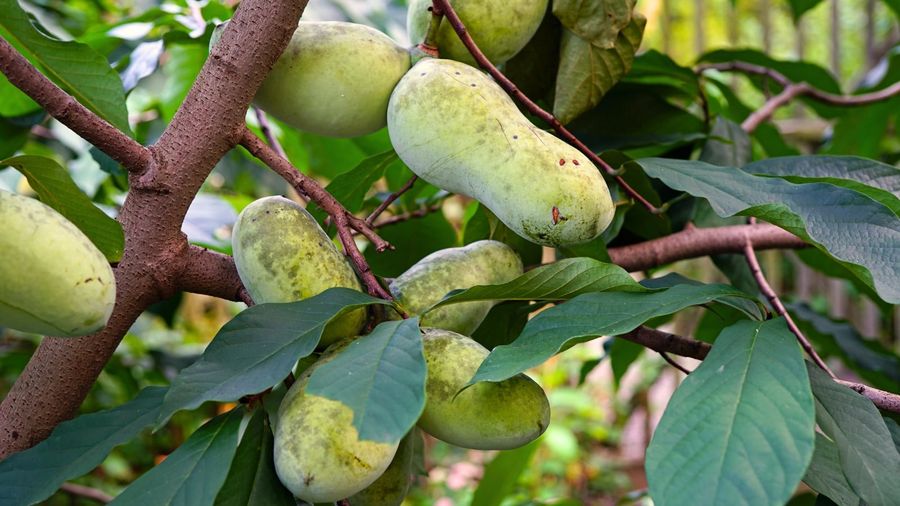
| Mayapple — unripe | Mayapple ripe fruit | Only the fully ripe, soft, yellow fruit flesh is traditionally eaten, in small amounts. Green fruit, leaves, roots, and seeds are toxic. |
| Poison sumac (Toxicodendron vernix) | Smooth / staghorn sumac | Poison sumac grows in swamps, has loose clusters of white berries hanging down. Edible sumacs have upright red berry cones and dry ground. White berries = never touch. |
| Moonseed (Menispermum canadense) | Wild grape | Moonseed fruit has a single crescent-shaped seed and no tendrils; grapes have forked tendrils and several round seeds. Moonseed is toxic. |
| Virginia creeper berries | Wild grape | Five-leaflet leaves and dark berries on red stems. Berries are toxic — grapes never grow with five-leaflet creeper leaves. |
| Foxglove & other garden escapes | Comfrey, mullein (leaf stage) | Heart toxins in all parts. A reminder to never ID a plant by leaves alone. |